
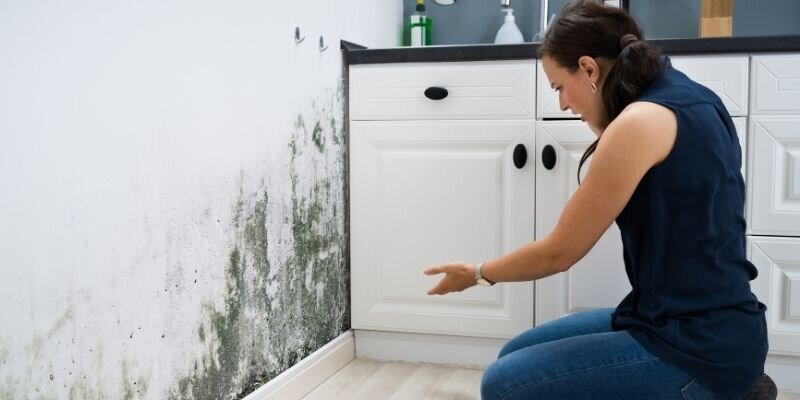
Mold rarely shows up in a listing photo. It shows up deep in a buyer’s inspection report, a few days before closing, with the moving truck already booked. One week you’re clear to close. Next, the lender wants a remediation invoice and a clearance letter, which nobody has.
This happens all over the state, from the Sandhills to the Blue Ridge, and the panic is usually bigger than the problem.
Can You Sell a House with Mold in North Carolina?
For years, I treated mold as a repair problem. I was wrong. It’s a financing problem wearing a repair costume.
No North Carolina law makes it illegal to sell a house with mold growth. There’s no permit gate and no required cleanup before the transfer. Owners sell homes with active moisture problems all the time, and those closings are valid. What the law cares about is what you say about the house, and we’ll get to that below.
The friction comes from the buyer’s side of the table. A conventional lender has opinions about damp crawl spaces, and an FHA appraiser works from a checklist. A nervous buyer has an inspection window and cold feet. None of that is a legal barrier, though it sure feels like one when three buyers walk away in a row.
So the honest answer splits in two. Legally, yes, you can sell. In practice, your buyer pool shrinks to people who don’t need a loan or don’t mind the fight.
Why Is Mold Such a Common Problem in North Carolina Homes?
Picture a brick ranch outside Fayetteville with the AC running hard all summer. By November, the crawl space smells like pond water, and the floor joists have gone gray.
Our climate does this. Summers are humid, winters are mild and wet, and red clay holds water against foundations instead of letting it drain. Add a vented crawl space, common under older houses here, and you’ve built an incubator. Warm, wet outdoor air drifts into a cool, dark space, hits cold ductwork, and condenses. The EPA says wet materials should be dried within 24 to 48 hours to keep mold from growing, so a slow leak doesn’t need long.
Storms make it worse. Helene brought catastrophic flooding to western North Carolina, and the coastal plain has taken hurricane after hurricane. A property can look dry a week later with insulation that never recovered. Flood damage often travels with mold, so it’s worth reading about selling a house with water damage in North Carolina if a storm hits your place.
Then there’s the hidden stuff. A clogged HVAC condensate line dumps water onto the closet floor. Washer hoses weep. In Asheville and Boone, somebody finishes a basement and frames walls right against the block with no vapor barrier.
Vacant houses get it too. During probate or a long listing, someone shuts off the HVAC to save money, humidity climbs, and the walls bloom.
Under most Piedmont houses, the pattern is boring: a torn vapor barrier, a dripping valve, and standing water in the low corner. Fix the water, and the mold stops arguing with you.
What Do NC Mold Disclosure Laws Require Sellers to Tell Buyers?

“If I already cleaned it up myself, do I still have to put it on the form?”
Sellers ask me this constantly. Disclose it, and document the repair right next to it. North Carolina handles disclosure through the Residential Property Disclosure Act, Chapter 47E of the General Statutes. The North Carolina Real Estate Commission publishes the form, and it covers homes with one to four units. Its questions cover water intrusion, crawl space dampness, roof leaks, and environmental hazards. Mold lives inside those questions, even where the word doesn’t appear.
Timing matters. The buyer should have the completed form no later than when they make an offer. If it shows up late, the buyer gets a short window to back out, so don’t sit on it.
Then there’s the “No Representation” box. On most questions, you can check Yes, No, or No Representation. Picking No Representation is legal, and it means you’re making no statement either way. Buyers’ agents read a column of those boxes as a warning sign, though, and the box won’t cover you if you actively hide something. Checking “No” about mold you’ve seen, smelled, or gotten a report on is how sellers end up in court. Brokers carry their own duty, too. A licensed agent who knows about a material defect has to tell the buyer about whatever the seller checked.
Nothing in the law requires you to remove the mold before you sell. Disclosure and remediation are separate decisions, and plenty of North Carolina sales close with a signed form describing a moisture problem nobody fixed.
Why Does Mold Kill Conventional Home Sales in North Carolina?
That gap between telling and fixing is where sales fall apart.
Lenders draw the hardest line on government-backed financing. FHA appraisers check the house against HUD’s minimum property requirements, which focus on health, safety, and whether the structure is sound. The lender then decides what has to be fixed before the loan closes. Visible mold in a crawl space, standing water, and rotted joists are all on that list all the time. VA and USDA loans work much the same way. A conventional lender has more room, yet an underwriter staring at a black-streaked subfloor will often add conditions anyway.
Buyers back out for softer reasons. Mold carries a health worry; other defects don’t, and families with small kids hear “spores” and stop listening. A cleanup in the low thousands can sound like a teardown to someone who’s never priced one.
Delay is where sellers quietly lose the most money. Redfin put North Carolina’s median sale price at $375,000 in August 2026, and the median home took 67 days to sell. Add a failed inspection, a relist, and another round of showings, and you’re carrying the mortgage, taxes, and insurance into another season. Speed varies inside the state. In Cary, Redfin’s numbers for the three months ending August 2026 show homes selling after about 25 days. A Cary seller and a seller in Rockingham County can feel the same mold problem very differently. Even in a fast market, some owners skip the fight and talk to cash home buyers in Cary first.
Relisting also costs you leverage. Buyers’ agents see the days-on-market counter reset and assume something’s wrong, and they price their offers to match.
How Much Does Mold Remediation Cost in North Carolina?
Guess this number wrong, and you’ll spend real cash on a repair that adds nothing to your price.
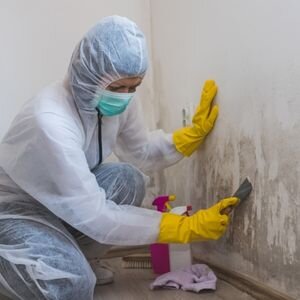
Look at national numbers before you panic over an estimate. Angi’s 2026 cost guide puts professional mold remediation at an average of $2,368, with most jobs between $1,223 and $3,757. Crawl space work often runs lighter, roughly $500 to $2,000, since the affected area is small, even when it looks scary. Angi also says pros usually charge $10 to $25 per square foot of affected surface.
Those figures cover the cleanup, not the water.
The moisture source is where budgets break. You might need regrading, new gutters and downspouts, or a sealed vapor barrier. Crawl space encapsulation, a dehumidifier circuit, a roof valley repair, or new ductwork can each cost more than the cleanup they protect. Then comes rebuilding, because the drywall and insulation that came out have to go back in.
Insurance helps less often than owners hope. Most policies cover mold from a sudden covered event, like a burst pipe, and exclude long-term seepage. If you have a valid claim and the insurer’s number feels low, a licensed public adjuster can work on your side for a percentage of the recovery. Ask what that percentage is before you sign.
Whatever you spend, receipts don’t turn into market value. They turn into financeability, which is a different thing.
What Are the Steps to Remediate Mold Before Selling in NC?
Spray bleach, wipe the joists, list on Saturday. That plan falls apart the moment someone asks where the water came from. Killing surface growth without stopping the moisture just resets the clock.
Start with the source. It might be a roof leak, a failed sump, a cracked condensate pan, or a downspout dumping against the foundation. Find it and repair it first, because every dollar after that is wasted if water keeps coming.
Next, size up the job honestly. The EPA’s homeowner guide draws its line at about 10 square feet, roughly a three-by-three patch. Below that, a careful owner with an N95, gloves, and goggles can usually handle it. Above it, or anywhere near the HVAC system, bring in a remediation contractor who uses containment and HEPA filtration.
Porous materials don’t get cleaned. Drywall, batt insulation, carpet pad, and particle board get bagged and hauled out. Framing lumber, concrete, and tile can usually be cleaned and dried in place.
After removal comes drying and proofing. A good crew records moisture readings before leaving, and many sellers order an independent post-remediation test. That third-party clearance letter earns its cost when you negotiate.
Keep every invoice, photo, and lab result in one folder. Attach that packet to your disclosure, and a buyer sees a handled problem instead of a mystery. Their lender gets something concrete to underwrite.
If you already know you’re selling as-is, skip pre-listing mold testing. You’d be paying for a report that proves what the buyer’s inspector will find anyway. Wondering if you can sell a house as-is without an inspection in North Carolina? We walk through that question in a separate post.
What Do North Carolina Homeowners Really Do About Mold?
You’ve got three doors, and none of them is wrong.
Door one is full remediation before listing. It makes sense when you have cash, time, and a house that’s otherwise in good shape, and it opens the listing to FHA borrowers again.
The second option is listing as-is on the open market with a price cut built in. You disclose up front, ask less, and wait. This works best in busy submarkets where some buyers will take on a project. In slower corners of the state, these listings sit.
Last comes a direct cash sale to an investor or local home buyer who prices the repair into the offer and closes on your timeline. Here’s a look at what changes when you sell your home for cash in North Carolina instead of listing it.
Your equity and your deadline usually decide which door fits, more than the mold does. A seller with plenty of equity and six months can afford to remediate. Someone facing a job move in thirty days, a probate deadline, or a divorce decree is solving a different equation.
I see one pattern a lot. Sellers pay for remediation right before listing, then get offers close to what they’d have gotten anyway, minus about what they spent. The repair bought lender eligibility, not price, which is still a fine trade when the other option was no buyers at all.
If you’d like a number to compare before deciding, Bright Home Offer will look at a property with active mold and tell you what a cash close looks like. Stack it against your net after commissions and repairs, then pick the door that serves you.
How Does Selling a House with Mold to a Cash Buyer in NC Work?
Price point shapes the remediation math. Resideline tracked 518 closed sales in Kannapolis over the six months through early October 2026, with a median price of $302,500. On a home in that range, a five-figure cleanup and rebuild eats a real slice of the seller’s equity. That math is a big reason sellers there ask how we buy houses in Kannapolis without repairs.
A cash close runs differently from a listing, and most of the differences are subtractions. There’s no staging and no weekend showings with a dehumidifier humming in the background. There’s no appraisal, either, because no lender is setting conditions.
You share what you know about the property, including its mold and water history. A buyer walks through it, often within days, and looks at the crawl space, HVAC, roof, and any stained walls. An offer follows, priced as-is after repair costs and a margin.
Do you still fill out a disclosure? In most sales, yes. The duty generally doesn’t depend on who’s buying, though the statute lists a handful of exemptions your attorney can check.
Title work and the mortgage payoff set the pace from there. We close at a local attorney’s office, your loan gets paid off from the proceeds, and you pick the date. If your property is near our home base, you can see how it works when we buy houses in Durham.
You do give up the top of the market. A cash offer on a moldy house comes in below a renovated comparable, because the buyer takes on the remediation and whatever’s behind the drywall. In return, you get certainty and speed. For a seller juggling a wet crawl space and a mortgage they can’t carry, that trade often pencils out.
What Are Common Questions About Selling a Moldy House in NC?
Sellers hear “lowball” in “cash offer,” and sometimes that suspicion is earned. Get two or three numbers and do the subtraction yourself. Compare each one to your realistic open-market net after commissions, concessions, the remediation invoice, and several more months of payments.
Will buyers find out if you say nothing? Almost certainly. Inspectors carry moisture meters, and painted-over staining still reads wet. Hiding it turns a disclosure issue into a fraud issue.
Can the buyer back out during due diligence? Yes. North Carolina’s standard residential contract lets buyers walk away during the due diligence period for any reason. A mold finding is exactly the kind of thing that triggers it. Your broker or closing attorney can explain how the fee and deposit work in your contract.
Should you rent it out and wait? Landlord habitability rules are a separate body of law, and putting a tenant into a property with untreated mold growth creates real exposure. If it isn’t healthy enough to sell, think hard before making it someone’s home.
What if the property sits near the South Carolina line? State law stops at the border. A house in Fort Mill follows South Carolina’s disclosure rules, even if the owner banks and works in Charlotte.
Where Can You Learn More About Selling a House with Mold in NC?
North Carolina has no standalone mold statute and no state license for mold remediators, so vetting falls to you. Ask for IICRC-trained technicians, proof of general liability coverage, a written scope of work, and references from jobs in your county.
Free resources help too. The EPA’s mold and moisture guide explains cleanup in plain language, and your county’s building inspections office can say whether a repair needs a permit. The North Carolina Real Estate Commission posts the current disclosure form.
If an estate, a divorce, or a prior claim is involved, pay for an hour with a residential real estate attorney. That hour costs less than one bad answer on a disclosure.
Before you decide anything, talk to two contractors and one investor. Contractors tell you what the repair really costs in your market, and the investor tells you what the house is worth untouched. That spread is your decision, laid out in dollars instead of worry.
Frequently Asked Questions
Can a Seller Get Sued for Selling a House with Mold?
Yes, and the claims that succeed almost always involve concealment rather than the mold itself. If you knew about a moisture problem and answered “No” on the form, or painted over staining, a buyer has a path to a misrepresentation or fraud claim. Sellers who disclose a known problem in writing stand on much firmer ground, because the buyer took the condition with open eyes.
Does North Carolina Have Laws That Deal with Mold Specifically?
Not as a dedicated statute. Mold falls under the broader residential property disclosure framework, which asks sellers about known conditions like water intrusion and dampness. There’s no state cleanup standard for home sales, and no state license for the people who do the work. EPA guidance and industry standards fill that gap in practice.
What Actually Happens After You Sell a Home with Disclosed Mold?
Usually nothing dramatic, which is the point. The buyer bought the property knowing its condition, the sale closed, and the new owner handles the repair on their own schedule. Trouble tends to surface later only when the disclosure was incomplete or a seller made verbal promises that contradicted the form. Keep copies of everything you signed and every photo you took.
When Should Someone Walk Away From a House with Mold?
A buyer should walk when nobody can find the moisture source, when the structure has rot, or when remediation estimates approach what the repaired house would be worth. For a seller, walking away usually means declining to fund a repair that won’t come back at closing. If that math doesn’t fit your equity and timeline, selling as-is to a cash buyer still puts money in your hand.
Will a Bank Approve a Mortgage on a House with Visible Mold?
Often not, and that’s the wall most sellers hit. Underwriters, and FHA and VA appraisers, even more so, treat active water intrusion and visible growth as health and safety issues. The loan gets held up until someone fixes the problem, sometimes with a reinspection. That’s why moisture-damaged properties stall even at a fair price, and why the buyers who want them don’t need an appraiser’s blessing.
Should You Fix the Mold or Sell Your NC House As-Is?
A house with mold in North Carolina is a disclosure question and a math problem, not a legal dead end. Tell the truth on the form, keep your paperwork, and decide honestly whether remediation returns more than it costs you in dollars and months. Sometimes it does, and I’ve seen that math work on houses I’ve bought. With deferred maintenance, an inherited estate, a tenant still in place, or a deadline set by something other than the market, it usually doesn’t.
If your property fits that description, you’d probably rather hear a real number than a repair list. We’re happy to walk it with you and tell you what we’d pay as-is, mold and all. There’s no cleanup, no inspection repairs, and no obligation if the number doesn’t work for you. Reach out whenever you’re ready, and if the answer is “not yet,” that’s fine too.
Helpful Blog Articles for North Carolina
- Can You Sell a House With a Mortgage in North Carolina
- Documents Required for Selling Inherited Property in North Carolina
- Can I Sell My House and Still Live in It
- How Long Does It Take to Sell a House in North Carolina
- How Much Do Realtors Charge to Sell a House in North Carolina
- How to Take Your House Off the Market in North Carolina
- How to Sell a House With Termites in North Carolina
- Can You Sell a House With Mold in North Carolina